Welcome to RIBA Insight|
RIBA Insight menu
- Solutions
- Products
- Monthly Briefing
- NBS Plus: like being perched on the specifier's shoulder
- Construction industry manufacturer BIM case study: Kingspan Insulation
- NFB launches BIM online diagnostic service
- Read all about it - how CPD Articles can boost your page rankings
- BIM is another sales tool
- How do architects use the Internet?
- Archive
- Meet the team
- Events
- Case studies New!

Eight ways to improve your email unsubscribe process
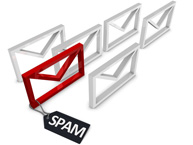
Healthy direct marketing depends on a willingness to respect the public’s preferences. That means making it as easy to unsubscribe from an email relationship, as it was to subscribe in the first place, says Guy Hanson of Return Path.
Here are Guy’s eight ways to improve your email unsubscribe process:
1. Make sure the unsubscribe link works
A broken unsubscribe process is a guaranteed way of upping the red mist quotient. It also contravenes email marketing law. Make sure this forms part of the testing process for every campaign you send out.
2. Make the unsubscribe link highly visible
It’s no good burying it in the email footer in six point type in the hope that your disengaged subscribers won’t see it. People want to see it, and if they can’t, they’re going to hit their spam complaint button. Put the unsubscribe link in the email header instead. This may sound counter-intuitive, but my experience is that if the opt-out mechanism is more visible spam complaints reduce as a direct consequence.
3. Don’t set up your unsubscribe link as an image
The recipient who wants to unsubscribe has typically got to the point where they’re disengaged from your email programme. That means that they’re not that likely to be enabling the images that have been disabled by default. They are therefore not that likely to find the unsubscribe link if it has been set up as an image! Make it a text-based link, so that it will always be seen.
4. Don’t assume disengagement – ask the question
In fairness, there is also a flip-side to the disengagement coin. It may be that the reason that I am going through the process is simply that I have a new email address. I don’t necessarily want to leave the programme, but I do want to stop it sending emails to my old address. Make this easy for me by asking the question: "Are you unsubscribing because you have a new email address? If so, would you like to tell us what it is so that you can continue receiving our great offers?"
5. Make the unsubscribe process simple
However, don’t try to cover all the bases and then end up with a process that is unnecessarily difficult to use. I don’t want to have to go and update my preferences. I definitely don’t want to have to log in to an account that I have in all likelihood forgotten the login details for. If the process is going to be that hard, then it’s going to be much simpler for me to junk you instead. Rather, make the unsubscribe process as simple as possible – ideally one click should do the trick.
6. Action the unsubscribe immediately
Once I’ve actually hit the button, don’t go and sour the mood by telling me that it may take up to 28 days to action my request. Most email broadcasting platforms are capable of applying an unsubscribe request in real time, and there’s certainly no excuse for not being able to achieve this within 24 hours. Consumers know this – if they are still receiving emails seven days later from a programme that they’ve already unsubscribed from, they’re going to resort to the nuclear option instead!
7. Pre-empt unsubscribe problems
It is also a good idea to explain to your subscribers that there may be valid reasons why unsubscribing won’t work, for example if they originally registered using a different address, but one that their exchange server is still auto-forwarding to. Or if the registration was made using a generic email address (‘sales@’, ’info@’, etc) where they’re included as part of a distribution list.
8. Avoid follow-up emails
Finally, I’ve seen several programmes that send a follow-up email to confirm the unsubscribe request. Some might argue that this is a nice CRM touch. However, to me it feels more like an attempt to second-guess the subscriber, along the lines of, "we know that you’ve told us that you want to leave our email programme, but we’re sure that you didn’t really mean it!" While confirmation emails are generally regarded as a good thing in email marketing, I’d argue that this case represents a valid exception to the rule!
Author Guy Hanson is Director, Professional Services, Response Consulting at Return Path, the world's leader in email certification and scoring. Download and read Return Path’s unsubscribe study by Margaret Farmakis.

Request a call back from RIBA Insight|
For more information about RIBA Insight advertising and marketing solutions, please complete our short further information form.

RIBA Insight Monthly Briefing|
Sign up now for our FREE Monthly Briefing, featuring exclusive marketing advice, useful reports and the latest industry news.

